Football bodies explore FIFA presidency rotation amid governance concerns

Concerns over FIFA’s leadership and governance
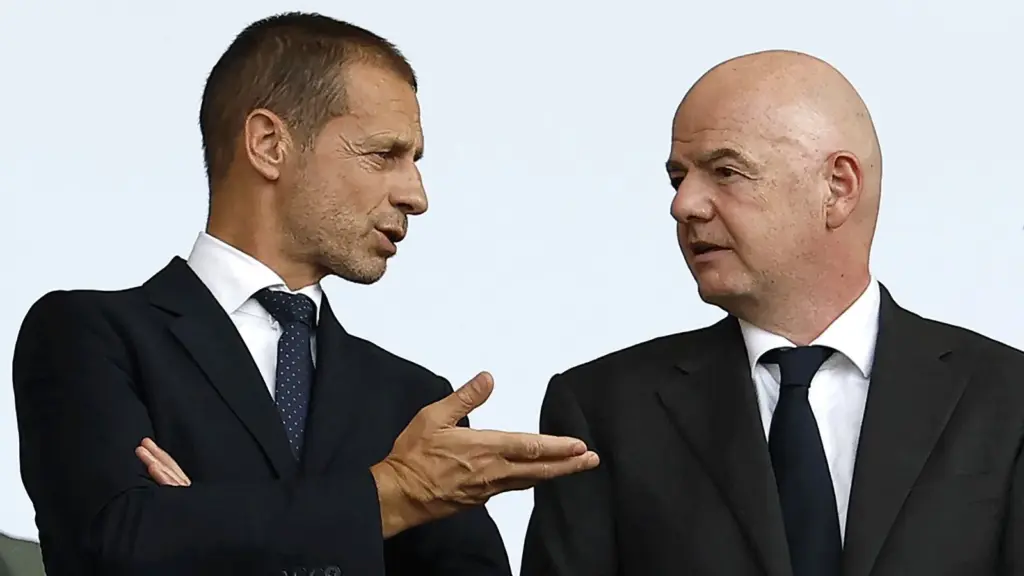
An alliance led by UEFA is reportedly exploring plans to rotate the presidency of FIFA among the continental confederations. This initiative aims to reduce the power associated with the position, particularly if Gianni Infantino were to step down. The move comes amid ongoing internal conflict concerning the “FIFA Forward Enterprise” plan, a dispute that has escalated into efforts to remove the current Swiss-Italian official from his role.
Despite Infantino’s firm stance, UEFA and its allies have begun to formulate future plans. Several football leaders recently convened in Salzburg for the UEFA Super Cup. This gathering marked their first collective in-person meeting since the onset of the FIFA crisis, which began with Infantino’s announcement of his intention to sell shares in the World Cup to private investors.
The presidents of AFC, Concacaf, and UEFA issued a joint letter to the football community, expressing collective concerns. The letter highlighted that football is a shared passion belonging to players, fans, clubs, member associations, and institutions safeguarding its future. It stressed that the growth seen over the past decade was a collective effort involving FIFA, confederations, and member associations, not the work of a single individual.
The joint letter also addressed the integrity of the game and its elected leaders. It stated that leadership in football is a duty of service, not a possession of power. The confederations asserted that trust is broken when deception occurs and when an individual prioritises personal interests over the collective that granted them authority.
Proposals for reform and independent review
Aleksander Čeferin, the UEFA president, reportedly held multiple meetings during the Salzburg gathering. The presence of Patrice Motsepe, president of the Confederation of African Football (CAF), was noted as particularly significant, given CAF’s previous support for Infantino. Discussions in Salzburg are understood to have included proposals for an independent review of FIFA’s governance, alongside a policy document outlining the future structure and principles of the organisation.
Sources suggest that limiting the scope of these reforms to FIFA alone, without involving continental confederations, holds significant meaning. This approach is partly linked to the plans for rotating the presidency among continental bodies, drawing parallels with structures seen in the European Union and similar multinational institutions. Such a rotation would ensure that FIFA’s president would not wield the extensive power held by Infantino or his predecessors.
Complementing this idea, there are also plans to significantly strengthen the administration surrounding the presidency, aiming to transform it into a more robust civil service body. The focus for UEFA and its allies is on achieving changes in leadership and governance at FIFA as a minimum outcome of the current crisis.
The joint letter from AFC, Concacaf, and UEFA criticised FIFA’s acknowledgement of mistakes in its process, stating that it was presented as a communication failure rather than a judgment failure. The letter highlighted a proposal advanced on a compressed timeline without meaningful consultation, pushed towards a deadline before member associations could properly review its terms. This was seen not as an oversight, but as a design intended to limit scrutiny.
The confederations also pointed out that FIFA’s recent letter did not acknowledge the inherent wrongness of the proposal itself, specifically the attempt to sell an interest in the FIFA World Cup. This was described as a profound failure of judgment and a fundamental breach of trust with the institutions FIFA is meant to serve. Furthermore, FIFA’s commitment to presenting a full report on these events to the FIFA Council was criticised for failing to recognise that proper governance would require an independent third-party review, not one conducted by FIFA itself or its staff.
The joint letter also noted that only one elected official was present at a recent leadership meeting in Morocco, with no FIFA Council members or member associations invited. Only the management committee, composed of FIFA-employed senior staff, attended. This meeting, where a select number of management committee members were summoned abroad instead of leadership addressing FIFA’s core in Zurich, reinforced concerns about a pattern of conduct perceived as believing the game is answerable to one individual rather than serving as its custodian.
The confederations concluded their joint letter by calling for unity to be honoured, advocating for leadership that serves football rather than seeking to command it, signing off with the names of Salman Bin Ibrahim Al Khalifa (AFC President), Victor Montagliani (Concacaf President), Aleksander Čeferin (UEFA President), Datuk Seri Windsor John (AFC General Secretary), Philippe Moggio (Concacaf General Secretary), and Theodore Theodoridis (UEFA General Secretary).
Source: uefa.com

