Indian Hockey Team Prepares for World Cup Challenge

Preparations and Team Focus
Indian hockey captain Harmanpreet Singh stated that the team has focused extensively on both offensive and defensive strategies in preparation for the FIH Men’s Hockey World Cup. The tournament is scheduled to take place in Belgium and the Netherlands from August 14 to 30. India secured direct qualification for the event after winning the men’s Asia Cup last year.
During a training camp in Bengaluru, the team concentrated on fitness, refining team structure, enhancing communication, and maximizing opportunities within the opponent’s circle. Harmanpreet emphasized the comprehensive nature of their training, covering individual attacking and defensive aspects, as well as collective defensive efforts. He also highlighted the importance of penalty-corner attack and defence, positioning, and communication.
Harmanpreet, who took a break earlier this year, expressed feeling refreshed and noted the encouraging performances of younger players. He underlined the significance of senior players openly communicating and instilling confidence in the newer talent. The captain mentioned the team’s strong performances in the Pro League, where they finished eighth, contributing to their current confidence.
Coach’s Perspective and Tournament Goals
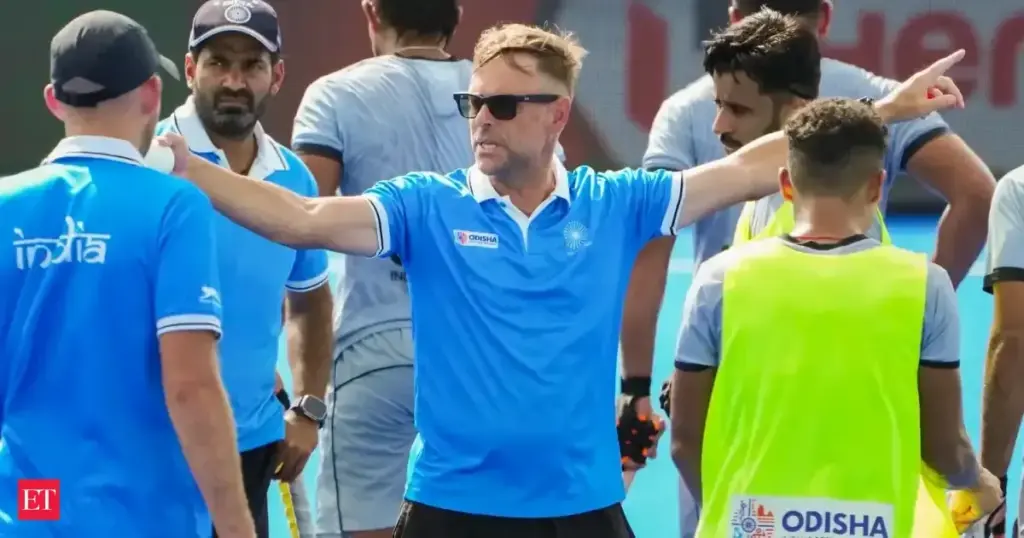
Craig Fulton, India’s men’s hockey coach, discussed the team’s aspirations for both the World Cup and the Asian Games. He acknowledged the historical significance of the World Cup, noting that it has been 51 years since India last won the tournament. Fulton sees the current captain, Harmanpreet, playing in his second World Cup, as a positive omen, similar to the captain who lifted the trophy in 1975.
Fulton highlighted the team’s current ranking and the relatively low probability of winning the tournament, which he believes reduces pressure and allows them to compete “under the radar.” He mentioned a strong series of games against teams like Pakistan, England, Germany, and Holland, indicating the team’s readiness. The coach stressed the importance of focusing on each game individually.
The coach also addressed the challenge of competing in two significant tournaments back-to-back: the World Cup and the Asian Games. This schedule necessitated a modified training approach, including different strength and conditioning regimens and the use of a larger squad, including goalkeepers, to manage player load and prevent injuries. Fulton acknowledged that this back-to-back schedule could place Asian teams at a disadvantage in the Asian Games, as other teams not participating in the World Cup will have a singular focus.
Fulton described the team as highly skilled, competitive, and confident, emphasizing a process-driven approach to avoid getting lost in permutations. He values players who demonstrate strong connectivity, trust, and adaptability, as well as those who can play multiple positions. The coach also prioritized including younger talent to gain experience in major tournaments, ensuring future goals for the team. He noted that captain Harmanpreet’s leadership has evolved, with increased responsibility and communication being crucial for the team’s success.
The team’s strengths include their ability to adapt and their effectiveness as a counter-attacking unit. Fulton outlined a “defend-to-win” philosophy, coupled with the capacity to press and counter from various positions on the field. He emphasized the importance of maintaining composure during challenging moments and not becoming overly excited when things are going well. The coach concluded that the team’s psychological resilience, characterized by bending but not breaking, is vital for performing when it counts.
Source: timesofindia.indiatimes.com

