Division emerges over Fifa president’s future following abandoned World Cup sale plan

Growing opposition to Infantino
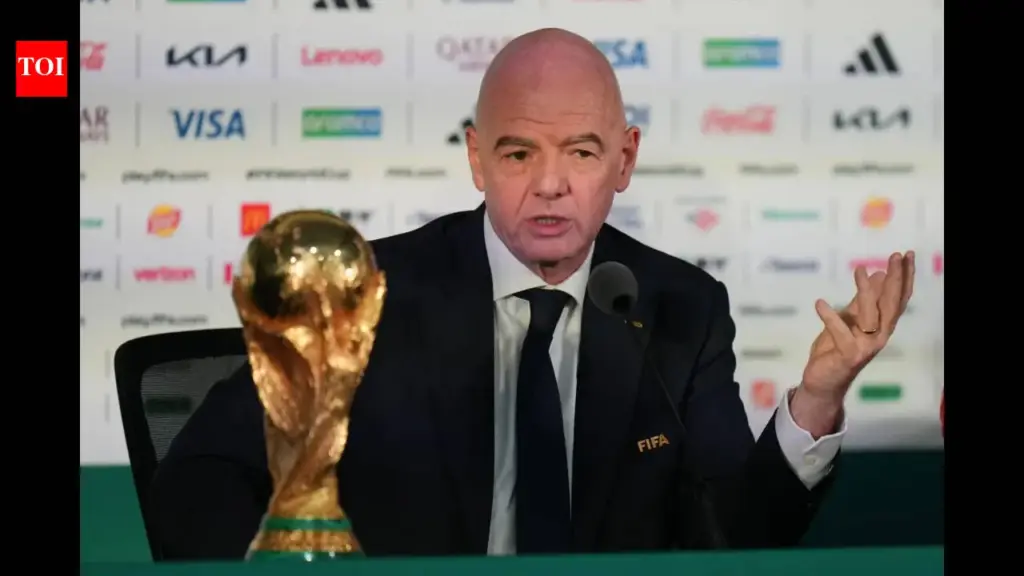
Gianni Infantino, the president of Fifa, is facing increasing opposition following his abandoned proposal to sell stakes in the World Cup and other competitions to private investors. While he was previously considered likely to be re-elected for a fourth term next March with broad support, the situation has shifted significantly.
A joint letter signed by Uefa, Concacaf, and the Asian Football Confederation (AFC) accused Infantino and Fifa of a “fundamental breach of trust” through deception. This coalition represents a substantial number of member associations, with 136 associations falling under these three regional governing bodies. The letter highlighted that the controversy was not about financial aspects or previously agreed competition decisions, but rather concerned the integrity of football’s governing structures and its leadership.
The three confederations emphasised that the growth of football over the last decade has been a collective achievement involving Fifa, the confederations, member associations, and numerous individuals across the sport. They argued that Fifa’s existing reserves should be responsibly distributed to strengthen investment in member associations, rather than pursuing the sale of stakes in future World Cup profits to private equity investors. Uefa had previously threatened a boycott of Fifa competitions by its 55 member associations if the proposal was not withdrawn.
The confederations also stated that their opposition was not related to changes in World Cup allocations, tournament expansion, or other decisions that had already been collectively agreed upon. Instead, they asserted that the issue was more fundamental, pertaining to the integrity of the game and the integrity of those elected to lead it. They criticised Fifa’s approach to the controversy, suggesting it was treated as a communication failure rather than a leadership and governance issue.
The joint letter further claimed that the proposal was advanced on a compressed timeline without meaningful consultation, pushed towards a deadline before member associations could properly examine its terms. The confederations concluded that attempting to sell an interest in the Fifa World Cup represented a profound failure of judgment and a fundamental breach of trust with the institutions Fifa exists to serve.
Shifting alliances and potential challengers
The global landscape of support for Infantino is fluid, with a current tally suggesting 73 associations in support, 124 in opposition, and 13 undecided. This picture is expected to change in the coming months. Several European countries, including England and Wales, have formally withdrawn earlier letters of support for Infantino’s re-election.
Despite the joint opposition from Uefa, Concacaf, and AFC, there are dissenting members within these confederations. For instance, Bhutan, the Philippines, and the UAE within Asia have backed Infantino. Asia is considered a potential swing region, with many associations yet to declare their position. Similarly, Mexico has supported Infantino, breaking ranks within Concacaf, although the USA and Canada have supported Concacaf’s recent statement without explicitly opposing Infantino’s rule.
The Oceania Football Confederation (OFC) and its members have not made any public comments regarding the situation. OFC indicated that a statement would be released after an upcoming meeting. Infantino continues to have strong allies, particularly within Africa (Caf) and South America (Conmebol), which have benefited from significant investment since he assumed leadership a decade ago. This investment could be crucial in securing votes from nations in AFC, Concacaf, and OFC, particularly those that have benefited from the Fifa Forward programme.
Saudi Arabia, which was awarded hosting rights for the 2034 World Cup during Infantino’s tenure, has not yet taken a public stance. The results of its own football leadership elections in August could influence the kingdom’s position and impact other views in the region. It is not guaranteed that every nation will align with its confederation’s stance.
Future possibilities for Fifa leadership
Infantino has not indicated any intention to step down, but there is a possibility that his time in charge could conclude by the autumn. This could occur if Fifa Council members attempt to force his resignation through an emergency meeting. Such a meeting can be convened if 19 of the 37 members request it, and it must take place within a fortnight. The council comprises nine members from Uefa, seven from AFC, six from Caf, five from Concacaf, five from Conmebol, and three from Oceania, alongside Infantino and Fifa secretary general Mattias Grafstrom. Given the council’s composition, this approach is considered unlikely.
The alternative is for a candidate to stand against Infantino in the March election. No individual has yet announced their candidacy, but if the leaders of Uefa, Concacaf, and AFC are serious about challenging Infantino, uniting behind a single candidate is likely their best strategy. The deadline for candidates to declare their intention to stand is November. Historically, other confederations have expressed frustration with European dominance in football, its competitions, and its wealth. This context has led to Concacaf president Victor Montagliani being frequently mentioned as a potential challenger to Infantino in recent weeks.
The distribution of votes could change significantly depending on who decides to run. For example, if AFC president Sheikh Salman were to put his name forward, it could potentially sway some associations in Asia that currently support Infantino. The overall global situation remains uncertain due to emerging divisions within confederations, the potential for key figures to declare their positions in the coming months, and the current absence of a clear challenger to Infantino. Fifa has defended Infantino against what it described as a “concerted and ongoing effort” to undermine his leadership, stating that critics should not seek to remove the president through “allegation, insinuation or misinformation” rather than established democratic processes. Infantino received backing from Fifa’s management board after a meeting in Morocco last Wednesday and apologised for the process surrounding the World Cup proposal.
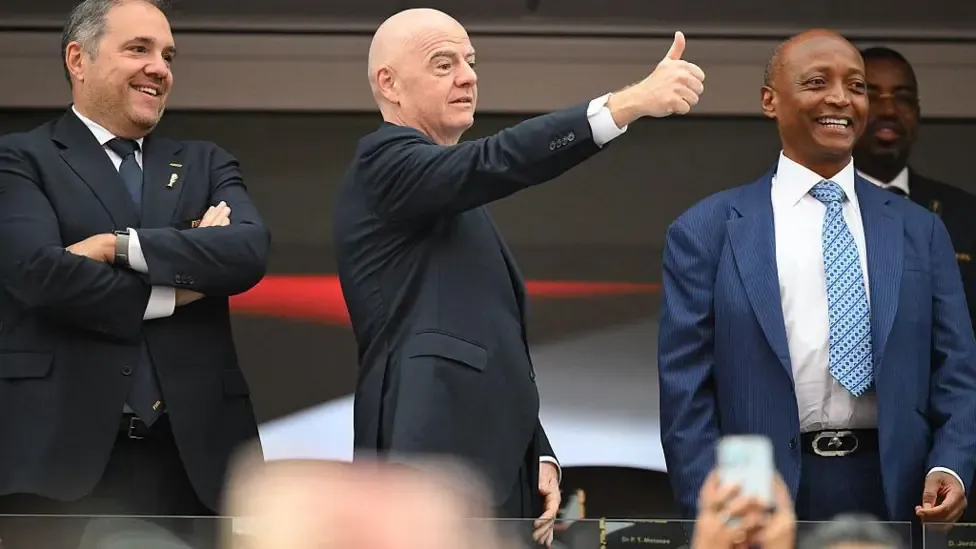
Uefa, however, stated that this announcement did not alter its opposition to the plan. Separately, Fifa has also faced scrutiny over a report concerning a departure payment made by Uefa to a female staff member who worked with Infantino when he was Uefa general secretary. Uefa confirmed the payment was made in line with regulations at the time, noting that its rules have since been tightened.
The global picture remains unclear because of emerging splits within confederations, the potential for key players to declare one way or another in the coming months and the hitherto lack of a clear candidate to challenge Infantino.
What is clear is that Infantino is no longer coasting towards a fourth term, if he clings on that long.
Source: bbc.com

